⏰ The Hidden Leadership Lessons in Crisis
The best leaders create artificial constraints before real constraints arrive
Originally posted Jan. 2024
I hope you, your family, and your teammates are safe and getting the support you need if you’re near the fires in Los Angeles.
This weekend, cars lined up around the block in Oakland to donate clothing and other items to fire victims in Los Angeles, and the donation station shut down hours early due to the overwhelming influx. As the fires force immediate choices on some, they’re triggering some reflection for those of us outside the immediate crisis zone about what we need – and what we can live without. This clarity, while born from crisis, holds important lessons for organizational leadership.
During growth periods, startups and scaling companies tend to accumulate initiatives, roles, and commitments like a house collects possessions. Every hiring plan seems crucial, every new project feels urgent, and core priorities become buried under layers of “nice-to-haves”. For founders and people leaders, this often manifests as spreading talent too thin across too many initiatives.
This is why some leaders find that crisis, despite its challenges, can be clarifying. A funding crunch or market downturn suddenly forces choices about team structure and strategic initiatives that should have been made during calmer times. But waiting for crisis to drive these decisions is a risky practice.
Companies that weather market disruption and economic downturns best are often those that didn’t wait for a crisis to understand their core priorities. McKinsey’s analysis of 1,500 companies during the 2008 financial crisis found that organizations with strong preparedness and clear priorities before the crisis achieved 3x higher total returns to shareholders compared to their peers.
The Power of Proactive Priority Setting
The best leaders create artificial constraints before real constraints arrive. They regularly ask:
If we could only focus our best talent on three key initiatives, which would they be?
Which roles and teams are directly driving our core mission versus supporting nice-to-have initiatives?
This isn’t just a theoretical exercise. It’s about developing organizational muscle memory around prioritization before you need it. It’s about maintaining a clear understanding of which teams and initiatives create the most value, so you can make rapid decisions when resources become constrained.
Mapping all current and future initiatives on this simple impact to effort 2x2 is a good place to start:
Source: Gamestorming
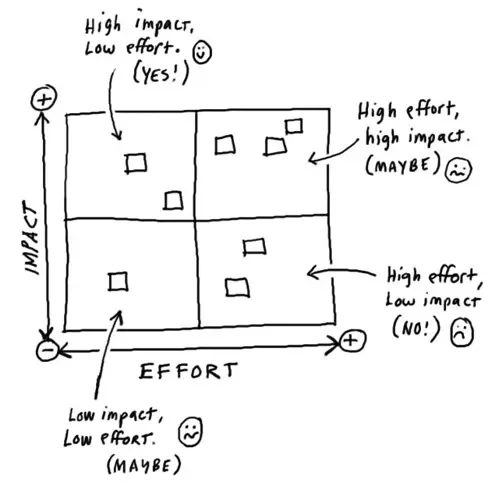
Source: Gamestorming
The hardest part of prioritization is having the courage to say “no” or “not now” to good opportunities. For leaders this means being willing to pause hiring for promising but non-core initiatives, or restructuring teams to focus on what’s most essential, even when all projects seem valuable.
Learning from crisis moments isn’t about living in fear or constant austerity. It’s about maintaining clarity about what matters most for your organization and your people, so that when challenges arise, you’ve already done the hard work of choosing. In building and scaling companies, as in life, knowing which teams and initiatives to protect – and which to pause or pivot – is a skill best developed before the moment of crisis arrives.
Start here
A simple written reminder of the fleeting nature of life can clarify your personal priorities. Here's one I learned from a recent episode of the Ezra Klein podcast that I may hang near my bed: